
2027 Plenary Speakers
2027 Plenary Speakers:
Angela Creese & Adrian Blackledge and the MultiLX Players
Beyond Tradition, Beyond Silos: Challenging the Canon in Validity Conceptualization
 Over the past several decades, validity theory has evolved toward increasingly comprehensive frameworks that emphasize the interpretation, use, and consequences of assessment (Lane & Marion, 2025). Yet, despite these advances, prevailing approaches continue to position the social dimensions of testing largely as consequences to be examined rather than as conditions through which validity itself is produced. Many foundational notions also reflect a canonical view of testing in which researchers, test developers, practitioners, policymakers, and test users occupy distinct roles with relatively discrete responsibilities for establishing validity. Contemporary testing operations such as accountability testing systems associated with the Global Education Reform Movement (GERM) challenge these assumptions. Closer examination of accountability testing indicates that validity is socially constituted and that the meaning, interpretation, use, and consequences of test scores emerge through interactions among multiple actors, institutions, and policy contexts.
This presentation argues that taking seriously the social ramifications of testing requires a deeper reconceptualization of how validity is produced. Validity is not simply a property supported through evidentiary arguments or a set of consequences resulting from assessment use. Validity, I argue, is an emergent, situated, and negotiated process, which is produced through networks of actors and institutions. Such a perspective requires moving beyond traditional boundaries separating psychometric, evaluative, social, and policy research and perspectives. This also underscores moving beyond the institutional silos that divide researchers, practitioners, policymakers, and industry.
Drawing on the scholarship of GERM, accountability testing, and socially mediated theories of assessment (e.g., McNamara & Roever, 2006; Shohamy, 2007; Chalhoub-Deville, 2025) this presentation reconceptualizes validity as an ongoing, practice-embedded process situated within complex socio-educational and policy-driven systems. From this perspective, validation extends beyond establishing support for score-based inferences to examining the broader processes through which assessment meanings are constructed, authorized, implemented, and experienced across contexts. Validity claims are, therefore, not solely established through technical evidence but are collectively negotiated among interconnected actors and shaped by institutional practices, policy decisions, and socio-cultural conditions. This reconceptualization offers a more realistic framework for understanding how validity is produced, sustained, and contested in an era of increasingly interconnected policy, research, development, and practice.
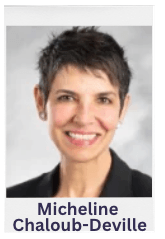
Micheline Chalhoub-Deville (Ph.D., The Ohio State University) is Professor of Educational Research Methodology at the University of North Carolina at Greensboro (UNCG), where she teaches courses in language assessment, validity, and research methodology. Prior to joining UNCG, she held academic appointments at the University of Minnesota and the University of Iowa. Her scholarship has contributed to advancing contemporary understanding of language testing and assessment as an emergent, context-dependent, and socially situated process.
Professor Chalhoub-Deville’s work over the years has examined language assessment for linguistically diverse populations, computer-adaptive testing, K–12 academic English assessment, admissions testing systems, accountability testing, translanguaging, and the role of social and contextual factors in shaping validity arguments. Her publications, presentations, and professional engagements have helped shape international discussions of language testing, validity theory, and assessment practices.
Her contributions have been recognized through honors such as the ILTA Best Article Award, ETS TOEFL Outstanding Young Scholar Award, UNCG School of Education Outstanding Senior Scholar Award, the Charles A. Ferguson Award for Outstanding Scholarship from the Center for Applied Linguistics and Stanford University, and the ETS-ILTA Samuel J. Messick Memorial Lecture Award. She founded the Midwest Association of Language Testers and served as president of the International Language Testing Association.
Beyond Academia: Applied Linguistics in Performance

As we conduct research in applied linguistics we encounter not only speech but also movement, light, music, rhythm, dreams, silence, absence, the visceral, the invisible, the spectral and much more. To garner, interpret and articulate such diverse semiotic means is a challenge for academic research. We are haunted by the ghosts of our discipline. However, in this presentation we tentatively propose a way forward, turning to performance to explore the multiplicity of semiotic worlds. Engaging with research material, performance artists will show sensuous and affective dimensions of experience, moving beyond the boundaries, binaries and demarcations of western / northern modernity (Deumert 2022).
The context for the artistic performance is an ongoing international research project (MultiLX. Strategies to Strengthen European Linguistic Capital in a Globalised World. Horizon Europe) which investigates young people’s communication in multilingual and minoritised language contexts across Europe, including Barcelona, Berlin, Birmingham, Børselv, Lugano, Santiago de Compostela, Târgu Mureș and Turin. In these European spaces complex histories of migration, linguistic oppression, nation-building, language endangerment and language revitalisation shape past, present and future lives.
We commissioned a dance company, Ascension, and a poet, Jasmine Gardosi, to collaborate with the MultiLX research team over 18 months. In this presentation the artists perform dance and poetry which responds to, illuminates and amplifies semiotic material collected in the research project sites. Their performance ventures beyond the referential, as rhythm, rhyme, movement, energy, action and imagination push research outcomes to become something more than themselves. The artists engage with modalities beyond language to reveal the plurality of multi-sensed experience, their performance open to the unfinished, the unthought and the unexpected, never claiming to know, allowing that all things could be different.
Adrian Blackledge is Professor of Applied Linguistics at University of Warwick. He conducts research in the fields of multilingualism, translanguaging, heteroglossia, language ideologies, language and migration and language policy. He is author or editor of 14 books which report this work. He is currently developing strategies for creative research practice, crafting artistic means to observe, analyse and make evident semiotic life. In recent publications he has explored creative ways to display communicative encounters, including presenting them as ethnographic poems and playscripts (cf. Ode to the City – An Ethnographic Drama; Volleyball – An Ethnographic Drama; Interpretations – An Ethnographic Drama; Voices of a City Market. An Ethnography - all with Angela Creese; all Multilingual Matters). In his current research he has put in place opportunities for artists and language researchers to engage in sharing and mutual exchange. These creative partnerships enable language researchers to work in collaboration with film-makers, poets, storytellers, dancers, choreographers, singers, puppeteers and digital media artists. An award-winning poet, he was Birmingham Poet Laureate 2014-2016.
Angela Creese is Professor of Applied Linguistics at University of Warwick. She is Principal Investigator of the MultiLX research project (2024-2027, Horizon Europe), which provides new knowledge about the communicative practices and language ideologies of young people in Europe. She has led multiple large research projects funded by national and international funding bodies. These projects illustrate the power of large, multilingual, ethnographic teams to deliver inclusive, equitable and outward-facing research. She writes about applied linguistics and relational ethics, linguistic ethnography and multilingualism. In addition to eight authored books, six edited books and 100+ research articles, chapters and reports she has edited several large handbook collections, including The Routledge Handbook of Language and Relational Ethics (in preparation, with Adrian Blackledge, Edina Krompák and Jai Mackenzie). Her most recent authored volume is Essays in Linguistic Ethnography. Ethics, Aesthetics, Encounters (with Adrian Blackledge, Multilingual Matters, 2023). She is a Fellow of the Academy of Social Sciences. In 2010 she received the Helen C Bailey Award (Alumni) for outstanding contribution to educational linguistics from the University of Pennsylvania. She was a Distinguished Visiting Fellow of the Advanced Research Collaborative, City University, New York, 2019–2020.
Jasmine Gardosi is former Birmingham Poet Laureate and an Honorary Doctor of Letters, Birmingham Newman University. They are a multiple slam champion, beatboxer, winner of the Out-Spoken Prize for Poetry and winner of the Saboteur Award for Best Spoken Word Performer 2023. Their work exploring neurodivergence, LGBTQ identity and mental health has appeared on Button Poetry, at the Tate Modern, Glastonbury Festival, Symphony Hall, BBC and Sky Arts. They have been invited to perform and run workshops around the world, and their poem about the pandemic, filmed on a rollercoaster, was broadcast across America on PBS. Their poetry/beatbox/Celtic Dubstep show about gender identity, Dancing To Music You Hate, won the Saboteur Award for Best Spoken Word Show and toured to the Philippines with the British Council.
Ascension is a UK-based company working with dance, parkour and movement. Under the guidance of co-founder and director Ashley Jordan, Ascension has engaged in artistic collaborations with multiple partners, including the Royal Shakespeare Company, the Commonwealth Games and the BBC. Ascension has toured dance productions nationally and internationally. In addition to developing high-quality performance, Ascension creates participatory projects which extend dance opportunities to young people, particularly nurturing an interest in dance in boys and young men. Ascension creates bold, ambitious work centred on human connection to space and place.
How Does Music Anchor Language Learning? Feedback from SLA to Cognitive Psychology
 Under similar learning environments, why do individuals learn language at different speeds and with different levels of attainment? In cognitive psychology, sensory theories of language learning have looked beyond language itself, identifying individuals’ musical abilityperception and reproduction of basic sound properties (e.g., melody, rhythm)—as a key foundation for shaping distinct language learning trajectories. However, this claim has remained controversial, partly because it is difficult to observe language learning as it unfolds over time, especially in the contexts of first language acquisition and language delays.
In this talk, I introduce an emerging paradigm that applies music-based theories of language learning to a methodologically unique context—Second Language Acquisition. SLA allows researchers to track short- and long-term learning trajectories from lower to higher proficiency across diverse age groups (adults, children) and learning contexts (e.g., classroom instruction, immersion, and study abroad). Specifically, I will summarize findings on (1) how individuals differ in musical ability (e.g., at perceptual, cognitive, motoric, and statistical levels) and why such differences arise (e.g., age, experience); (2) how individuals with different musical ability profiles learn various dimensions of language differently (e.g., phonology, vocabulary) under certain learning conditions (e.g., form- vs. meaning-based; input- vs. output-based); and (3) how understanding one’s musical ability could help predict and support learners who may otherwise struggle despite high motivation and ample learning opportunities (e.g., through combined music and language training).
Finally, as an applied linguist, I will discuss how such findings from SLA, as ecologically valid case studies, can provide feedback to complex and unresolved debates about language and music learning mechanisms in cognitive psychology. This is one example of how applied linguistics can not only draw on theories from neighboring disciplines, but also inform them.
Kazuya Saito-van Poeteren is Professor of Education at University College London, UK. His research examines how second language learners develop different dimensions of speech and language in naturalistic, classroom, and study-abroad contexts, and how instruction can help optimize these learning processes. A central strand of his work investigates how individual differences in auditory and music-related processing shape language learning trajectories across learners and contexts. He is the Co-Founder of Tools for Second Language Speech Research and Teaching, an open science platform that makes a range of online pronunciation research and teaching materials freely available (http://sla-speech-tools.com/). For his recent publications, see his personal website (http://kazuyasaito.net/).
Language and the Application of Civil Rights in Challenging Times
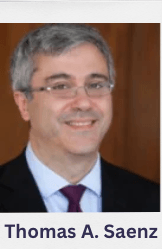
Thomas A. Saenz (President and General Counsel, Mexican American Legal Defense and Educational Fund)
Abstract coming soon!
What Words Alone Can’t Convey: On AI and Existential Solidarity Evan Selinger
 We live in a time when artificial intelligence (AI) systems can generate impressive results. Increasingly, the tells of AI writing are becoming harder to spot, and if the technology keeps improving, it will be even harder to detect traces of AI in the future. Given this trajectory, one might wonder: Why should we continue to value writing written by humans for humans?
In this talk, I’ll argue that there is a dimension of communication that non-conscious, disembodied AI cannot provide—one that’s crucial for human well-being. It’s existential solidarity. Historically, the concept of “solidarity” has been defined in various ways that refer to matters of common interest and sensibilities. Some contemporary authors, such as Zadie Smith, even center their writing around it. But in the AI age, there’s a pressing need to introduce a new variant of the term.
“Existential solidarity” is a meeting of the minds that occurs when we engage with the creative communication of others. Processing what they’re conveying rightfully elicits in us a deep form of resonance and recognition that affirms we are not alone in the universe. Through existential solidarity, we learn or are reminded that others share our plights, joys, deeply committed views, and even mundane experiences. The following passage from James Baldwin beautifully captures how existential solidarity diminishes alienation by providing solace. “You think your pain and heartbreak are unprecedented in the history of the world, but then you read. It was Dostoevsky and Dickens who taught me that things that tormented me were the very things that connected me with all people who were ever alive, or who had ever been alive.”
Since existential solidarity is an important but controversial idea, I’ll explain what it entails and discuss some reasonable objections to the thesis.
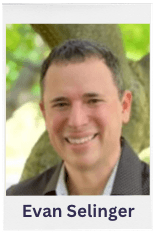
Evan Selinger is a professor of philosophy at Rochester Institute of Technology, and his research and teaching focus on the social, ethical, and legal dimensions of technology. Evan’s most recent books, Move Slow and Upgrade: The Power of Incremental Innovation (co-authored with Albert Fox Cahn), Re-Engineering Humanity (co-authored with Brett Frischmann), and The Cambridge Handbook of Consumer Privacy (co-edited with Jules Polonetsky and Omer Tene), are published by Cambridge University Press. Committed to public philosophy, Evan is currently a Contributing Writer at The Boston Globe, a frequent contributor to the LA Review of Books, and has previously written for The NY Times, The Guardian, The Atlantic, Slate, The Nation, Wired, The Wall Street Journal, CNN, BBC Future, One Zero, Salon, MTV News, The Daily News, and The Daily Beast. In the areas of public and educational policy, Evan has collaborated with organizations such as the Institute for Defense Analysis, the ACLU, the Stop Surveillance Technology Oversight Project, the Justice Collaborative Institute, Fight for the Future, the Future of Privacy Forum, and the Organization for Economic Cooperation and Development, and with companies like Microsoft, Meta, and IKEA, and federal agencies such as the National Science Foundation.
From Policy to Practice: Applying Deaf Epistemology to Bilingual Education
 This plenary examines how applied linguistics can move from describing language issues to transforming educational policy and practice when Deaf epistemology is placed at the center of bilingual education. Drawing on leadership experiences at Gallaudet University and long-standing work with Deaf children, families, teachers, and educational systems, the talk explores how American Sign Language and English bilingual education requires more than the recognition of two languages. It requires a shift in whose knowledge counts, how language access is understood, and how institutions are held accountable for creating equitable conditions for learning.
The presentation connects Deaf bilingual education to the 2027 AAAL theme, 'Focus on the Applied,' by showing how applied linguistics can inform real-world decisions about language planning, curriculum design, assessment, teacher preparation, and community engagement. Particular attention will be given to the movement from language policy statements to daily practices that affirm sign languages, Deaf cultural knowledge, and the lived experiences of Deaf, DeafBlind, hard of hearing, and signing communities.
Using examples from Gallaudet's bilingual mission and broader educational initiatives, the keynote considers persistent challenges, including audism, limited public understanding of sign languages, uneven implementation of bilingual frameworks, and the need for assessment systems that reflect Deaf children's full linguistic repertoires. The talk also invites applied linguists to reconsider the boundaries of the field by making Deaf and sign language issues more visible within mainstream applied linguistics.
Ultimately, this keynote argues that Deaf bilingual education offers applied linguistics a powerful case for connecting theory, research, policy, and practice. Centering Deaf epistemology can expand how the field understands language rights, linguistic justice, and the social responsibility of applied scholarship.
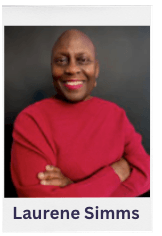
Laurene E. Simms, PhD, is a Professor in the Department of Education at Gallaudet University in the School of Language, Education, and Culture. Her scholarship, teaching, and leadership focus on Deaf bilingual education, American Sign Language and English bilingual development, language planning and policy, teacher preparation, and equitable educational practices for Deaf, DeafBlind, and hard of hearing children. She has served in major leadership roles at Gallaudet University related to bilingualism, language policy, and institutional practice, including work that bridges research, community knowledge, and implementation across educational settings.
Dr. Simms has been a long-standing advocate for centering Deaf epistemology, sign language access, and culturally sustaining pedagogy in early childhood and teacher education. Her work emphasizes that bilingual education for Deaf children must be grounded in Deaf ways of knowing, full access to sign language, family and community engagement, and accountability across schools
AAAL 2027 Plenary Keynote Information - Laurene E. Simms, PhD and institutions. Through national and university-based initiatives, she has contributed to professional development, assessment, and policy efforts that support Deaf children's language development and strengthen the preparation of educators working in bilingual ASL and English contexts.