
AAAL Leadership Updates
June 2026 AAALetter
Table of Contents
- A Continued Engagement with Relational Accountability | Manka Varghese
- AAAL Conference Updates | Mari Haneda & Francis Hult
- 2027 Virtual Conference Updates| Melanie Wong & Ryuko Kubota
A Continued Engagement with Relational Accountability
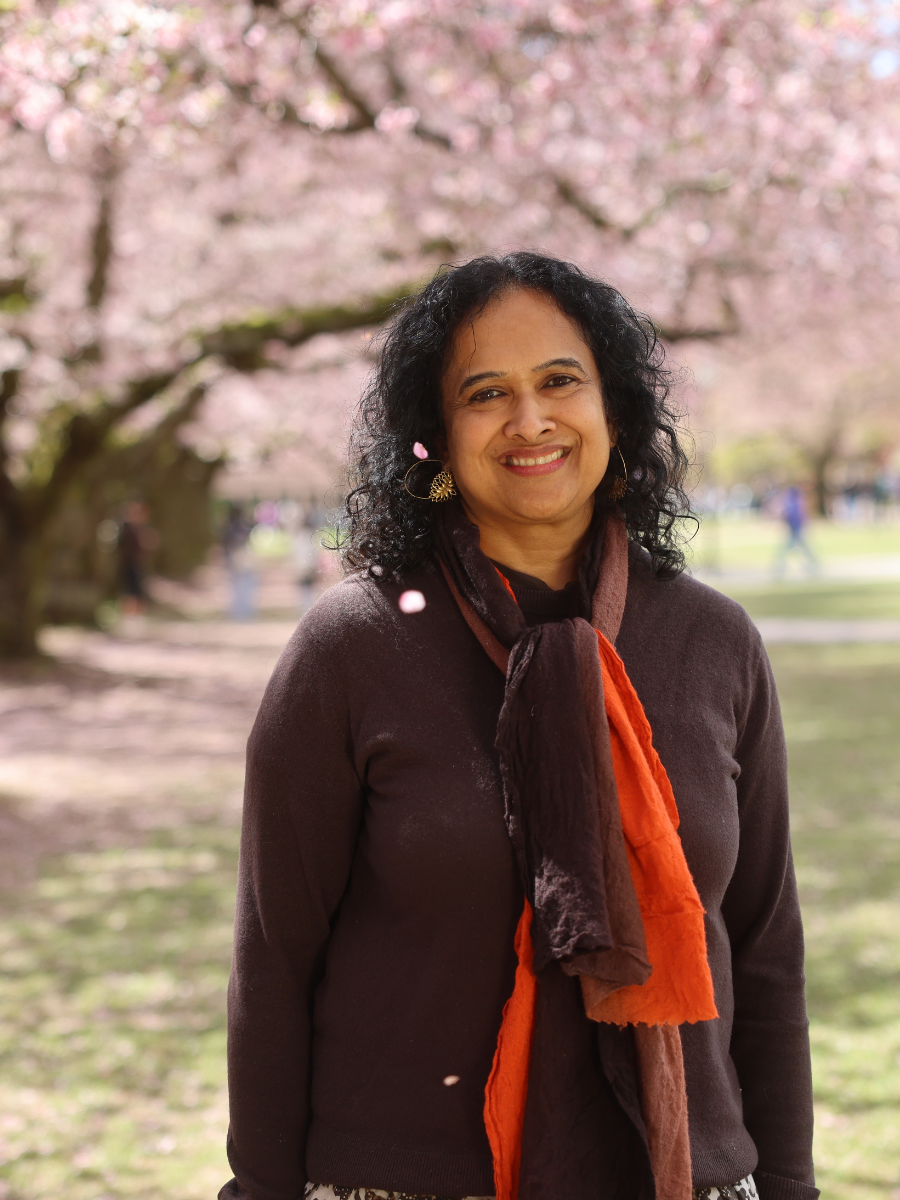
Manka Varghese, University of Washington
AAAL President
Dear AAAL members,
As I am writing my opening message as the current president, I hope you are all able to start unwinding a little bit from the academic year as summer is approaching and you are finding opportunities for rest and restoration, in spite of what has been a challenging year for many. Another R letter term I would like to invoke again for this coming year is the same one that our team had proposed as a theme for the 2025 Denver conference, that of relational accountability. This concept which originated and is widely used by Indigenous scholars is asking us to know and center our relations and be accountable to them in terms of our research and our relationships involving humans and the non-human world. It feels more important than ever to center this work, now, in our field and in the association.
I was recently reminded about how helpful the framework and values of relational accountability can be over two different recent professional experiences. One was during our recent professional and personal interactions at the Chicago conference, and the sustenance these interactions provide to many of us. The other was on a trip I have just returned from with three other Applied Linguists at the 16th International Conference on Foreign Language Teaching and Applied Linguistics (FLTAL 2026) in Uzbekistan. Although we are not in the same subdisciplines within AAAL, we were able to center our relationality to each other and our hosts, and the values of the overall field by learning and contributing to how Applied Linguistics is being practiced in its localized versions in Central Asia. As ambassadors of our field and engaging in such experiences, I am left with the appreciation of how we can continue to expand our own understanding of the field and iteratively help promote it in its new forms.
I thank all of you who have joined me in this collective and individual journey through your service in this association, some of you for many decades, and I invite those who have not, to do so. Please check our website, www.aaal.org to learn about multiple opportunities to do so. A way to start doing this is by reviewing submissions or serving as strand coordinators for our conference proposals for both our upcoming in-person 2027 Atlanta conference and our second online conference, after our very successful 2026 Chicago conference and our first online conference. The call for proposals will be going out on June 1 and will be due July 15th. Another way to engage with AAAL is to serve on one of our many committees, including our award committees for which the nominations closed on June 1. The call for nominations for committees will go out by the end of June with a deadline of September 15 so please consider nominating yourself and/or others, and please remember to vote for the members who agreed to be on this year’s election slate by the end of the month.
In this issue, it is wonderful to see recent award winners share their thoughts about their accomplishments: Daniel Silva and Jerry Won Lee (2026 AAAL Book Award Recipient) and R. Marika Kunnas (2026 AAAL Dissertation Award Recipient). In addition to many of our other committees, this year we are delighted to launch our JEDI standing committee whose chair is also part of the association’s Executive Committee (EC). Member of the JEDI committee, Ashley Moore, organized a panel on the multiple perspectives leading scholars in AAAL held around JEDI at the 2026 Chicago conference, which we hope to host every year at the conference.
In addition to the development of the online conference and the launch of the JEDI standing committee, we hope to continue to improve our advocacy work as an association through partnerships with other associations such as with AILA and TESOL, and through our Public Affairs and Engagement (PAEC) committee (for which we are revising the standing rules and its purpose) and with the help of our Online Education and Outreach (OEOC) committee. In addition to the regular work conducted by committees, other significant actions we will be taking this year are creating a task force which will be in charge of creating standing rules for the online conference and one to revise and administer our biannual membership survey, including conducting an analysis of its results.
In closing, I wish you as much of a restorative summer as possible. Once again, please keep an eye out over the summer for the 2027 conferences’ call for proposals, the call for nominations for committees, voting for members for this year’s election slate, and professional development opportunities such as OEOC’s June 17th webinar on Neurodiversity and Applied Linguistics.
AAAL Conference Updates
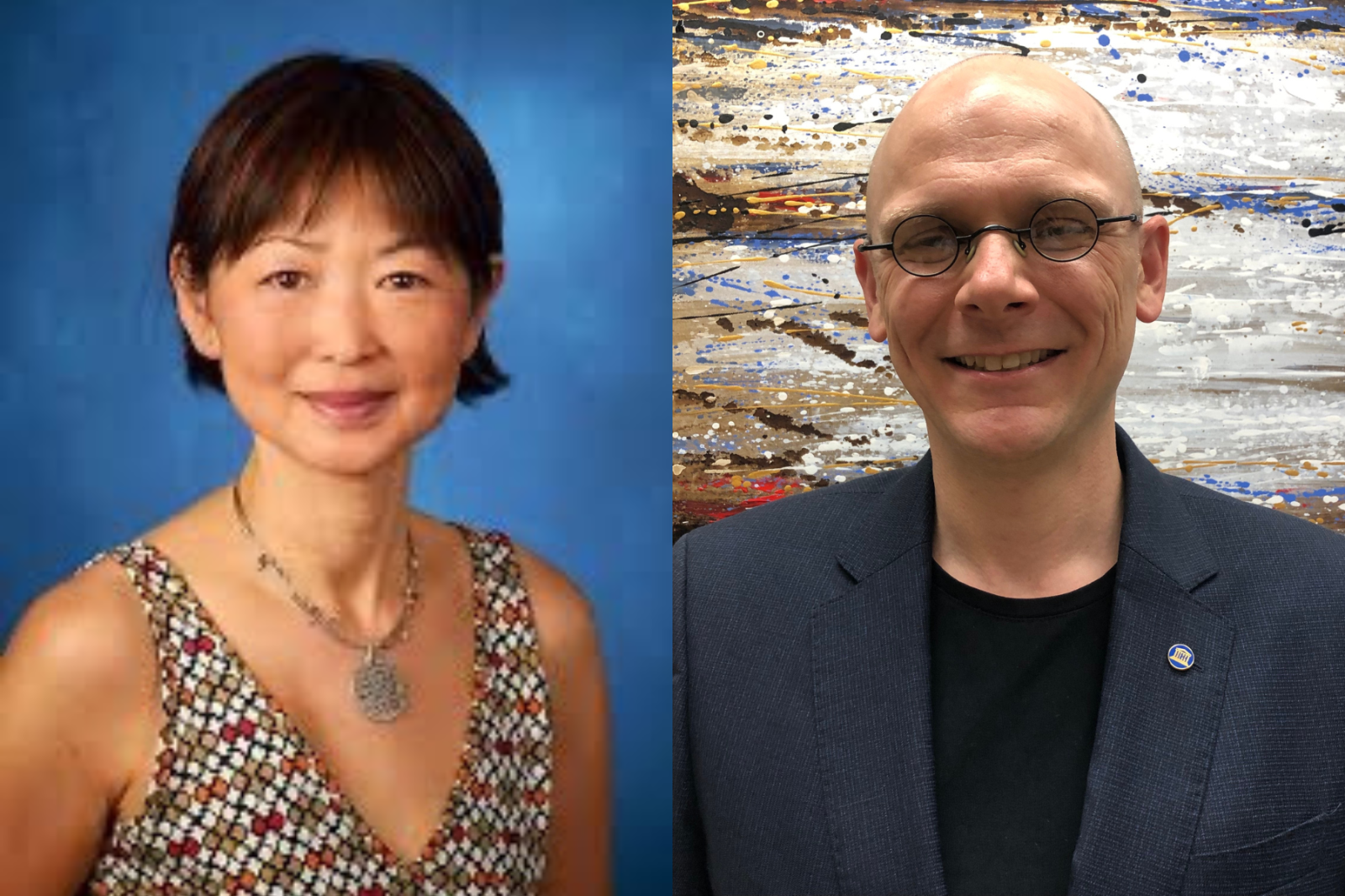
Mari Haneda, The Pennsylvania State University, AAAL 2026 Conference Chair & Francis M. Hult, University of Maryland, Baltimore County, AAAL 2027 Conference Chair and AAAL First Vice President
Reflecting on the 2026 AAAL conference in Chicago (from Mari Haneda)
The AAAL annual conference was held in Chicago, Illinois from March 21 to 24, 2026. The conference theme of “reimagining disciplinary places” invited participants to revisit the premise and practices of applied linguistics and to think about future directions for the field. Although the war in Iran made it impossible for some members to attend the conference, we had 1865 conference registrants. The attendee breakdown was 79.3% US-based and 20.7% international attendees. First-time attendees comprised 35%. The program included six plenary speakers, seven invited colloquia, one invited Indigenous language scholar presentation, three pre-conference workshops, many special sessions, as well as colloquia, individual paper presentations, roundtable sessions, and posters.
This year’s conference continued many initiatives from previous conferences. These included multilingual presentations, enhanced accommodations for presentations and conference attendance (e.g., a lactation room, a designated family resting and engagement area), affinity group meetings, and efforts to honor Indigenous scholarship and knowledge. New initiatives this year included the provision of interactive maps to help student attendees use local transportation services more readily to keep the cost down and an interactive map of restaurants near the hotel. I thank the business office and the local conference team at the University of Illinois, Chicago for their assistance.
I would like to express my deepest gratitude to the conference planning team, including the six doctoral students and one faculty member from the Pennsylvania State University, Robert Randez, and Kara Morgan-Short, as well as our wonderful AAAL business office staff. The conference would not have been possible without the strand coordinators, proposal reviewers, standing committee chairs and members, Graduate Student Council (GSC) co-chairs and members, the JEDI ad-hoc committee chairs and members, as well as the AAAL Executive Committees. Many thanks to them for their voluntary service.
The 2027 AAAL in-person conference in Atlanta will be planned and coordinated by Francis M. Hult, the conference chair, and his international planning team, whereas the second virtual conference will be chaired by Ryuko Kubota and Melanie Wong. Lastly, we will be making efforts to continue to improve the conference based on post-conference survey responses as well as your ongoing engagement with AAAL. I look forward to seeing you all at the 2027 AAAL conference.
Looking ahead to the 2027 conference: Our 50th meeting (from Francis M. Hult)
Ever since my first AAAL, I have dreamed of organizing our annual meeting. I grew up on conventions, attending major tradeshows like the Macworld Expo, the Consumer Electronics Show, among others with my dad when he worked in the computer industry in the 1980s and 1990s. I’ve come to find conferences oddly comforting in a nostalgic kind of way and also because they offer innovation wrapped in familiarity. I’ve been attending AAAL for over 20 years now. It’s a kind of home. Many have told me that they feel the same. It’s where we go to connect with friends and colleagues while having a predictable shared experience with keynotes, colloquia, presentations, posters, and more. Yet within this frame, each conference presents novelty and creativity. As conference chair, it’s the possibilities offered by the affordances of the event that I find particularly energizing.
Developing the conference program is a deep process. I’ve been reflecting on ideas for AAAL since the first time I attended, and it’s an honor now to have the chance to chair it. Planning for the 2027 program started in June 2025 when I began developing the theme and mapping topics for invited sessions. The 2027 theme, Focus on the Applied, which is fleshed out in detail in the call for proposals, draws attention to how our organization defines applied linguistics as “an interdisciplinary field of inquiry that addresses a broad range of language-related issues in order to understand their roles in the lives of individuals and conditions in society.” The 2027 conference invites participants to consider how work in applied linguistics generates knowledge about and has the potential to inform the intersection of language with a broad spectrum of experiences on individual, community, and societal scales in ways informed by an array of intellectual traditions from the humanities, social sciences, and natural sciences.
For the chair and planning team, every conference venue is a bit of a wildcard as it is selected several years in advance by a different set of executive committee members before the chair is involved in the planning process. I visited our 2027 location for the first time last month, together with the business office team. Each conference offers a chance to gain insight, even if brief and partial, into the local sociocultural context. In 2026, we experienced the urban environment of Chicago. In 2027, we’ll be in the setting of suburban greater Atlanta at the Renaissance Atlanta Waverly Hotel & Convention Center. It is located near the bustling district known as The Battery. On the one hand, it offers a breadth of dining, shopping, and entertainment. On the other hand, it is situated around the stadium complex of the Atlanta Braves, one of the problematic American sports franchises with names and iconography based on the commodification of Indigeneity. In addition, the suburban location of the hotel and convention center, with its limited bus service to the nearby Cumberland Mall, reflects the intersection of race with Atlanta’s public transportation policy. It is meaningful that we do not hide from such inequities, holding our conferences only in bubbles that obscure the realities of the society around us. We do well to use our meetings to take stock of social inequities and how the tools of applied linguistics can foster a deeper understanding of them and, potentially, contribute to improvements of the “underlying social and material conditions” of local communities as our definition of the field suggests. Submissions to the 2027 conference on these topics are welcome.
If these external inequities are glaring, they are also mirrors that help us take notice of the internal challenges to equity and inclusion that are (re)produced in our own house. I mentioned at the outset that many of us think of AAAL like home, but not all of our colleagues share that experience. Indeed, a number of members have confided to me in recent years that they continue to feel marginalized at the conference and in the organization. We have made progress through JEDI initiatives yet there is much more to be done. The 2027 planning team is working closely with the JEDI committee to be proactive in conference preparations and implementation, attending to structural considerations including physical and multimodal accessibility, inclusion initiatives, and settings for reflection and action. Everyone can make a difference, and we encourage all participants to be cognizant of welcoming colleagues into various networks, subfields, and social scenes. If I have learned anything over the years of attending AAAL, it is that the relationships we nurture are especially meaningful.
There will be plenty of opportunities to cultivate relationships and community at the 2027 conference. It is an auspicious year as it marks the fiftieth annual meeting of AAAL, with the first meeting having been held in Boston in 1978. We have several developments in store for this milestone year.
One that I am especially excited about is an update to the submission system. Since the 2023 resolution on multilingualism, AAAL has been working to enhance linguistic diversity at the conference. We are continuing this in 2027 by building out functionalities in the online system thanks to the hard work of our business office web development team in collaboration with X-CD, the company that provides the digital platform we use. For instance, proposals in additional languages will be submitted in the same manner as English-medium proposals using a text field that can accept different script systems, cultivating linguistic parity. Dropdown menus will allow submitters to select multiple languages for their proposal and presentation which, in turn, will make it possible to search the online conference program by languages so that participants can find and engage with linguistic communities of scholars at the conference.
As a language planning researcher, I am hopeful that these digital infrastructure enhancements will provide useful design and user experience (UX) capabilities to support multilingualism and translingual practices. I also acknowledge that all language planning efforts are imperfect. Making it possible for the conference program to be searchable by language, for example, means using an established technological standard for multilingual digital interfaces, specifically the ISO language code system. The theoretical meets the practical as such standards developed for technological purposes intersect with the challenges of delineating named languages vis-à-vis translingual practices or even enumerating languages at all. The ISO system has limitations with respect to what varieties are included and the linguistic nomenclature used, which reflects wider contemporary issues in developing digital tools that align with multilingual meaning-making and information management. AAAL is not alone in grappling with these challenges, and we will continue to do our best to adapt what is technologically feasible to advance linguistic diversity at the conference, recognizing that it is a work in progress. I am excited about the enhancements we have been able to put in place for the submission system this year and for future steps in this direction as technology continues to improve.
Additional features at the 2027 conference include a special fiftieth anniversary reception, a trial run of a new category for impromptu group presentations (check out the call for proposals for details), and other surprises. See you in Atlanta!
2027 Virtual Conference Updates
Melanie Wong, University of British Columbia & Ryuko Kubota, University of British Columbia
Co-Chairs, AAAL 2027 Virtual Conference
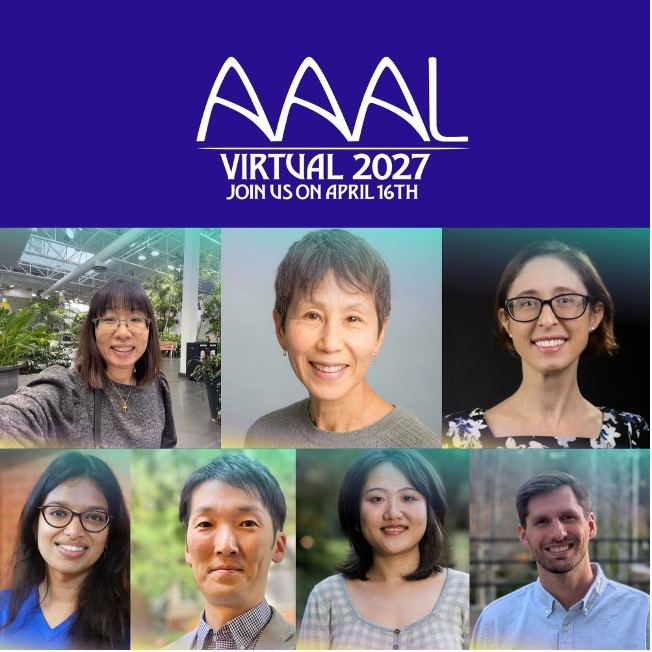
(upper left to lower right):
Melanie Wong, Ryuko Kubota, Katherine Christoffersen,
Charu Gupta, Ryosuke Aoyama, Yi Luo and AJ Holmberg
First, we want to express our sincere gratitude to the 2026 virtual conference planning team, in particular, Drs. Steph Link and Peter De Costa and the entire planning team (Robert Randez, Carlo Cinaglia, Matt Coss, Mukib Khan). We also want to thank the AAAL business office for their efforts to support this conference. After a successful 2026 virtual conference, we are thrilled to continue to carry this torch forward.
The AAAL virtual conference is an effort made by our organization to become more inclusive, accessible, and globally connected. AAAL made a decision in 2026 to host two conference formats, an in-person gathering and a virtual conference. This dual-format model reflects AAAL’s continued commitment to meet the needs of our diverse membership.
With this dual-format model, the in-person conference offers the traditional opportunities to engage in live plenaries, interactive sessions, hallway conversations, and the spontaneous opportunities that foster collaboration and community, while the virtual conference features both live and asynchronous sessions, global participation, and expanded access for those who’ve been historically underrepresented due to travel or financial barriers.
Hence, we are very excited to welcome you to the upcoming 2027 AAAL virtual conference. The theme this coming year is “Focus on the Applied” (see call for proposals). We have an invited plenary titled “What does ‘applied’ mean now in a technological world?” featuring panelists Naoko Taguchi (Northern Arizona University) and Mark Warschauer (University of California, Irvine), moderated by Lourdes Ortega (Georgetown University).
Similar to the 2026 virtual conference, participants will also be able to engage in live colloquia, pre-recorded individual paper presentations (with live Q&A sessions), interactive roundtables, asynchronous posters with text-based interaction, and networking sessions. However, a key advantage is that conference presentations will be available for 2 months after the conference for viewing. Hence, please consider presenting or attending our upcoming 2027 AAAL virtual conference! You will not want to miss this!
Important to note that, new this year, you may submit a first-author proposal to either the in-person or the virtual conference, but not both (please see the call for proposals for more information).
So mark your calendars:
📍 AAAL 2027 In-Person Conference – March 13-16, 2027 | Atlanta, Georgia
💻 AAAL 2027 Virtual Conference – April 16, 2027 | Online