
Feature Articles
June 2026 AAALetter
Table of Contents
- You Don’t Need Optimism for Hope | Daniel Silva & Jerry Won Lee
- Racialized French Immersion Students Speak Back: Representation, Racism, and French Proficiency| Kunnis Marika Kunnas
- Centering Justice, Equity, Diversity, and Inclusion (JEDI) in AAAL | Ashley R. Moore, M. Sidury Christiansen, Brittany Frieson, Aline Godfroid, Okim Kang, Pia Lane, Wesley Y. Leonard, Luke Plonsky, Tracy Quan, & Manka Varghese
You Don’t Need Optimism for Hope
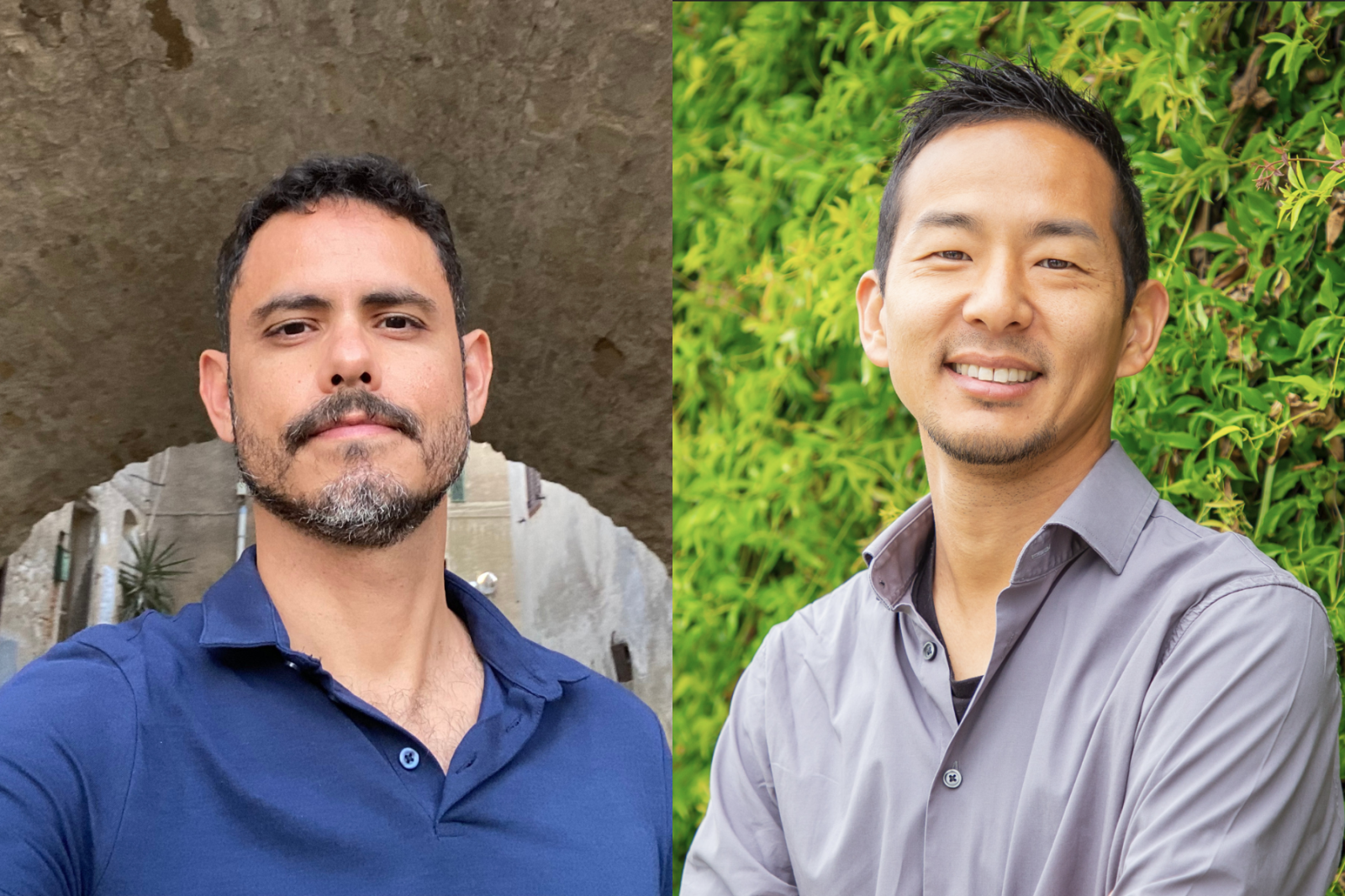
Daniel Silva, Universidade Estadual de Campinas, Brazil & Jerry Won Lee, University of California, Irvine
2026 AAAL Book Award Recipients
Hope can be an unexpectedly contested word. For some, it points to escapism, a feel-good belief that a better future will arrive on its own, no action required. For others, it carries unwanted spiritual overtones. And in a world of rising reactionary politics, ongoing wars, and mounting crises, hope can feel like a luxury few can afford.
Our book, Language as Hope, pushes back.
We argue that hope has nothing to do with optimism — and everything to do with method. You don’t need to believe the future will be better to practice hope. What you need is a set of situated, collective, and semiotic strategies for surviving uncertainty, precarity, or violence, and building toward something worth fighting for.
We learned this from activists and residents of favelas — working-class neighborhoods built by their own residents — in Rio de Janeiro. These are people navigating territorial disputes between police and drug traffickers, systemic racism, and chronic disinvestment. And yet, they don’t give up.
Empirically tracking their practices, we identified what we call a method of hope, a term we borrow from anthropologist Hirokazu Miyazaki, who used it to describe how indigenous peoples in Fiji systematically reclaimed their ancestral land. In our research, this method takes at least three forms: reorienting perspectives of time, calibrating semiotic and linguistic resources, and building solidarity networks.
That first move, reorienting time, may be the most surprising, as hope doesn’t have to be about the future at all. We document a collective mourning movement for Marielle Franco, a Black city councilwoman assassinated in Rio in 2018. In protests, public speeches, and interviews, we found that narrating Marielle as presente and viva “alive” was a way of signaling that justice for her assassination — and for struggles associated with it — needed to happen now, not later. The second move turns to a speech register calibrated in activist contexts: papo reto, or “straight talk” — a communicative practice whereby activists, favela residents, and others aligned with this social domain suspend politeness norms, speak directly, and translate messages across registers, with powerful effects: demanding rights, resolving conflicts, and warning against danger. The third move shows how these actors build solidarity networks — connecting peripheral communities, academics, and political allies — to communicate their struggles, scaling their efforts to amplify their social reach.
None of these moves requires optimism. They require something harder and more durable: a practical, collective, semiotic commitment to flourishing under otherwise dire conditions.
This book is also about how knowledge itself can be produced differently. We are two authors — one from the so-called Global North, one from the Global South — who tried to move beyond extractivist models of research. That meant centering scholars from Brazil’s peripheries, collaborating with local communities rather than simply studying them, and building partnerships that we work to make reciprocal.
Language as Hope is not alone in the broader applied linguistics conversation about concrete action in the face of bleak scenarios. We hope that the reimaginings of language and space-time we describe resonate with other semiotic practices that exist out there—and help amplify their visibility and uptake across contexts.
Racialized French Immersion Students Speak Back: Representation, Racism, and French Proficiency
Marika Kunnas /muh Ree kuh, University of British Columbia
2026 Dissertation Award Recipient

Dissertation Award recipient
French immersion, a Canadian public-school program where the language of instruction is French, has been long critiqued for issues ranging from pedagogy to equity. In 2018, the Toronto school board, the largest school board in Ontario, Canada, published enrolment data for French immersion that showed the over-representation of white, middle-class, anglophone students in immersion programs (Sinay et al., 2018). As a Black French immersion teacher, I was confronted on a daily basis with the whiteness of the program. While there have been many studies on multilingual students (Davis, 2023), and some on students with learning exceptionalities (Cobb, 2015) and those who are lower-class (Burchell et al., 2023), very little research has directly investigated the question of race in immersion programs (Wernicke et al., 2025). For this reason, my doctoral study asked: What are the experiences of racially minoritized French immersion students in Ontario, Canada?
My research was framed by four interconnecting frameworks. The overarching framework was critical race theory (Delgado & Stefancic, 2023) as race was a central question to this project. Within critical race theory, I also drew on critical antiracist theory (Dei, 2013), raciolinguistics (Rosa & Flores, 2017), and critical language and race theory (Crump, 2014). These theories framed the design of the study, which emphasized participant voice and agency, and they also influenced the analysis of the findings, examining how race, identity, and language intersected in participants’ experiences. This was a three-stage online study. In stage 1, I recruited three racially minoritized, Ontario-based French immersion students aged 16 — 18 who created counter-monologues about their experiences in French immersion. Inspired by critical antiracist theory, participants also created a list of suggestions for improving immersion. Their counter-monologues, as well as the other counter-stories shared during stage 1, were hosted on a website (https://mkunnas.wixsite.com/race-in-fi). In stage 2, over 200 immersion educators, students, parents, and staff visited our website, and 39 people from across Canada participated in an online questionnaire reacting to the counter-monologues and rating our suggestions for improvement. In stage 3, I invited the counter-monologue participants back for member-checking and to share the stage 2 findings.
Findings were analyzed separately, then comparatively through a recursive and inductive approach. I used thematic, content, and critical discourse analysis, and descriptive statistics for the questionnaire. Through the analysis, I developed three major themes which I will discuss next.
Absence of diverse cultural and racial representations
Participants in all stages spoke about how immersion programs had an over-emphasis on linguistic structures and grammar and an under-emphasis on diverse French cultures or peoples, to the point that a stage 1 participant said his learning was “verbs and nothing." Participants reported that white people, “white protagonists ... white stories ... [and] white parts of history” were the norm.
Diverse racial representation was also low in the student body and the teaching staff. Participants said that immersion was “very white” and perceived as white. For instance, a stage 1 participant wrote in his monologue that he was “whitewashed” for attending immersion, while another said students at her school were called “white Black kids” because they attended immersion. Here, French (immersion) is enregistered (Rosa & Flores, 2017) with whiteness.
Racism in immersion
Participants reported several instances of racism, particularly anti-Black racism perpetuated by students. Given the endemic nature of racism (Delgado & Stefancic, 2023), this was not a surprising finding. While there were “a few racist teachers,” teachers’ racism was largely in their complicity: they would rarely intervene when racism occurred, leaving this intervention up to students. One participant reflected that immersion teachers were the least likely to intervene when racism occurred. Depending on the circumstance, students ignored or accepted racism, educated about racism, or enacted consequences for racism.
Racism as less important than French proficiency
Interestingly, the stage 1 participants were more concerned about their perceived low level of French proficiency than they were about racism. One participant clarified that she assumed that she would experience racism regardless, so her low French proficiency was more upsetting to her. While stage 1 participants reflected at length on racism, almost every suggestion for improvement was rooted in improving student linguistic proficiency. Of note, stage 1 participants ascribed to (racialized) native speaker ideologies (Amanti, 2019), which likely influenced their perceived level of French.
Implications
This study has implications for education and research. First, French educators need training on integrating antiracism and cultural diversity into their teaching. Educators, with students, also need to question the raciolinguistic ideologies present in native speakerism to better support linguistic confidence. Second, this study demonstrated the power of integrating online arts-based research methods with racially minoritized participants; counter-monologue participants had increased agency and engagement, and stage 2 participants thought the counter-monologues “powerful” tools for reflecting on racism in immersion. Future research should consider arts-based methods and centering racially minoritized learners.
References
Amanti, C. (2019). Is native-speakerism impacting the Dual Language Immersion teacher shortage? Multilingua, 38(6), 675-686. https://doi.org/10.1515/multi-2018-0011
Burchell, D. M., Dobrin-De Grace, R., Kay-Raining Bird, E., & Chen, X. (2023). Overcoming barriers to access in French immersion: Special education needs and socioeconomic status. OLBI Journal, 13, 337-365. https://doi.org/10.18192/olbij.v13i1.6618
Cobb, C. (2015). Is French immersion a special education loophole? … And does it intensify issues of accessibility and exclusion? International Journal of Bilingual Education and Bilingualism, 18(2), 170–187. https://doi-org.ezproxy.library.yorku.ca/10.1080/13670050.2014.887052
Crump, A. (2014). Introducing LangCrit: Critical language and race theory. Critical Inquiry in Language Studies, 11(3), 207–224. https://doi.org/10.1080/15427587.2014.936243
Davis, S. (2023). Multilingual learners in Canadian French immersion programs: Looking back and moving forward. Canadian Modern Language Review, 79(3), 163–180. https://doi.org/10.3138/cmlr-2022-0051
Dei, G. J. S. (2013). Reframing critical anti-racist theory (CART) for contemporary times. Counterpoints (New York, N.Y.), 445, 1-14.
Delgado, R., & Stefancic, J. (2023). Critical race theory: An introduction (4th ed.). NYU Press.
Rosa, J., & Flores, N. (2017). Unsettling race and language: Toward a raciolinguistic perspective. Language in Society, 46(5), 621–647. https://doi.org/10.1017/S0047404517000562
Sinay, E., Presley, A., Armson, S., Tam, G., Ryan, T.G., Burchell, D., & Barron, C. (2018). Toronto District School Board French as a second language program review: Developmental evaluation. (Research Report No. 18/19-03). Toronto District School Board.
Wernicke, M., Masson, M., Kunnas, M., & Adatia, S. (2025). Moving beyond erasure of race in French as a second language education. In R. Kubota & S. Motha (Eds.), Race, racism, and antiracism in language education (pp. 125-146). Routledge. https://doi.org/10.4324/9781003283492-8
Centering Justice, Equity, Diversity, and Inclusion (JEDI) in AAAL
Ashley R. Moore, University of Toronto; M. Sidury Christiansen, The University of Texas at San Antonio; Brittany Frieson, The University of Texas at Austin; Aline Godfroid, Michigan State University; Okim Kang, Northern Arizona University; Pia Lane, University of Oslo; Wesley Y. Leonard, University of California Riverside; Luke Plonsky, Northern Arizona University; Tracy Quan, University of Colorado Boulder; Manka Varghese; University of Washington
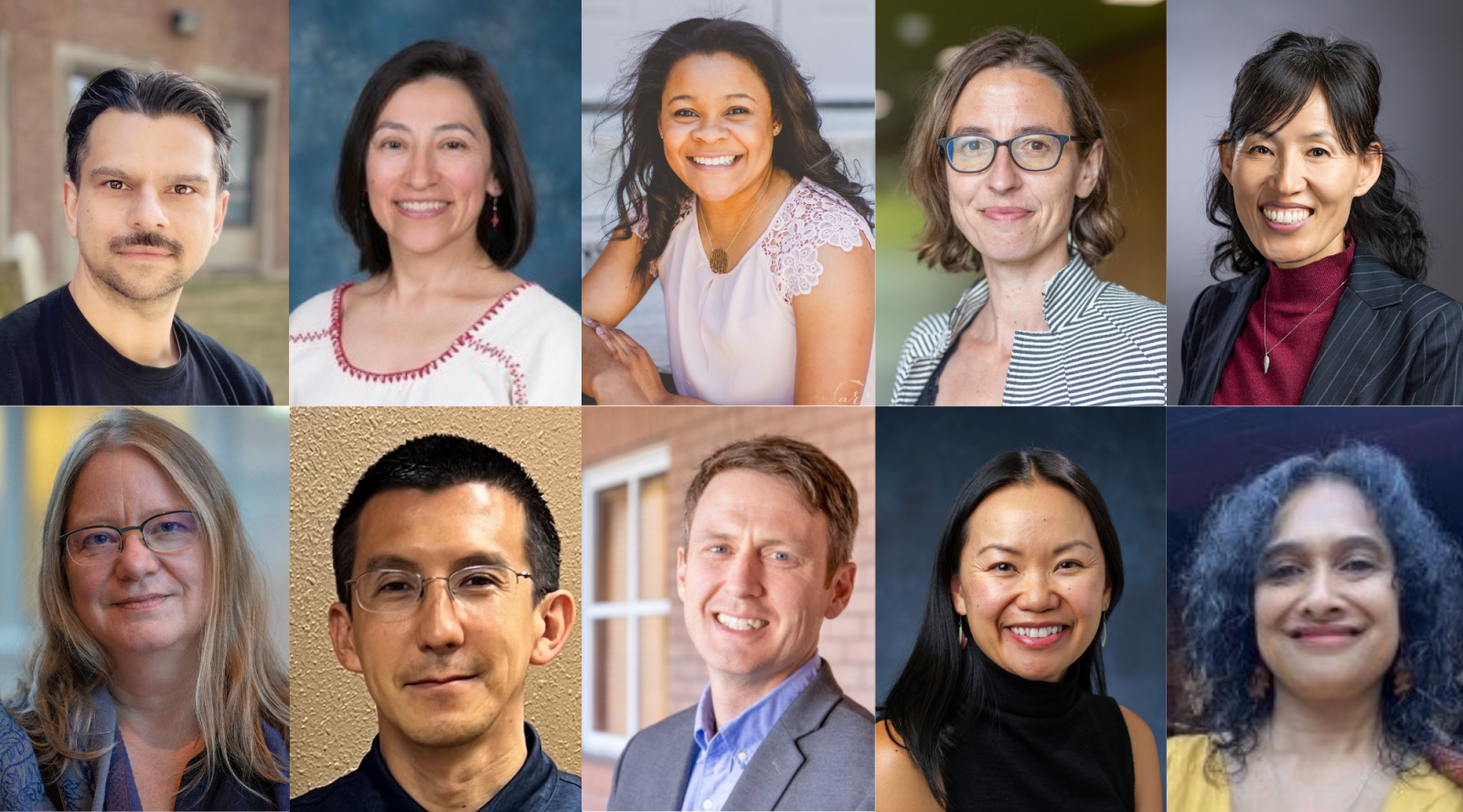
Ashley Moore, Sidury Christiansen, Brittany Frieson, Aline Godfroid, Okim Kang,
Pia Lane, Wesley Leonard, Luke Plonsky, Tracy Quan, & Manka Varghese
Justice, equity, diversity, and inclusion (JEDI) can feel like risky terms these days, but they are vital to conducting ethical, rigorous research involving humans and the more-than-human world. And, of course, they remain central to the mission of AAAL. In recent years, the association has been working towards establishing a dedicated JEDI Standing Committee and JEDI Officer charged with supporting the enactment of these commitments throughout the association. We’ve also seen increased representation of critical work in the programs of recent conferences. But are these concepts more relevant to some kinds of scholarship than others? And though they remain key concepts for many, has their increasing use as fashionable buzzwords and weaponised shibboleths drained them of useful meaning?
At the recent in-person conference in Chicago, in-coming President Manka Varghese, JEDI Committee member Ashley Moore, nine panelists from across AAAL’s diverse strands—Sidury Christiansen, Brittany Frieson, Aline Godfroid, Okim Kang, Pia Lane, Wesley Y. Leonard, Luke Plonsky, and Tracy Quan—and an engaged audience gathered to discuss what JEDI means to them, their research, and their participation in the association. Here we present a synthesis of that conversation, which we hope will act as an invitation for each member of AAAL to consider how JEDI and other related concepts are relevant to their work.
What do justice, equity, diversity, and inclusion mean to us and our work?
For many of us, these concepts are meaningful precisely because they are antonyms of conditions that trouble us. Indeed, Lane drew on Martha Nussbaum’s concept of positive pain to remind us that the experience of injustice, inequity, oppressive homogeneity, and exclusion are positive in the sense they teach us about what is important and spur us to action. Frieson and Kang are both motivated by evidence showing how the language practices of people belonging to equity-lacking groups are unjustly evaluated, constrained, and pathologized. Frieson’s work interrogates the systemic exclusion of Black children from dual language and bilingual education in the United States and the constraints that monolingualism and standard language ideologies place on their linguistic innovation. Her mission is to demonstrate that it is not Black children that need to be fixed but the institutional structures around them, and she shows how this can be done through implementing justice-oriented language and literacy education. For Kang, whose work on reverse linguistic stereotyping has contributed to increased awareness that listeners often evaluate speech not based on what is actually said, but on who they believe the speaker is, part of the solution lies in moving beyond speaker deficit models and encouraging more research on the responsibility of listeners in successful communication.
Other panelists discussed how they have been drawn to JEDI principles because of the effects of their opposite forces on the practice of research, the mobilization of knowledge, and the structures of the academy that control what counts as research and knowledge. Godfroid discussed how the exclusion of certain groups from participation in research, especially those belonging to equity-lacking groups, has resulted in homogenous participant pools and non-replicable results. Although a false dichotomy between JEDI-informed scholarship and scientific rigor is sometimes set up, both Kang and Plonsky noted the importance of both. We need strong science, and we also need responsible science. As Kang shared, rather than replacing its core standards, JEDI complements and strengthens the field of applied linguistics. Echoing 2026 plenary speaker Sible Andringa, Godfroid and Plonsky lamented current publishing models that leave scientific knowledge inaccessible to the public. Alongside Quan, they emphasized the importance of making access to knowledge more equitable through diamond open access journals and effective public scholarship in the form of non-traditional and public-facing media such as YouTube videos and games.
In their remarks, Christiansen, Leonard, and Quan jointly drew attention to the epistemic injustice that still shapes what work is recognised and rewarded in our field. As Christiansen commented, when certain perspectives, experiences, or epistemologies are systematically excluded or marginalized, the result is not only inequity, but also a narrower and less complete understanding of language and society. Focusing on Indigenous nations, Leonard asked us to remember the tribal nations whose rights, protocols, intellectual contributions, needs, perspectives, and sometimes even existence are heavily erased and misunderstood.
Some panelists complexified the discussion by exploring how the JEDI concepts relate to and sometimes sit in tension with other ideas. Quan underscored the importance of empathy in JEDI-related work, reasoning that a commitment to JEDI requires us to connect with and listen to individuals and communities that are unlike our own but also to recognize that folks’ commitment to and awareness of JEDI is on a spectrum depending on their employment situation, job title, country or state they are living in, type of institution, family pressures, degree of vulnerability, and so on. Research grounded in JEDI principles can contribute to healing by confronting and addressing historical and on-going injustice. However, Leonard cautioned that JEDI principles, especially that of inclusion, can be misapplied in ways that contribute to injustices for Indigenous nations. Key within this is what might be called the ultimate level of settler colonialism, where settlers falsely position themselves as Indigenous, thereby stealing Indigenous identities and from that vantage infiltrating academic spaces and projects, whether directly as faculty, staff, and students, or as community interlocutors who are part of academic projects and interventions, such as applied linguistics work around Native American languages.
What can AAAL do to further enact JEDI?
While the association is strongly committed to enacting JEDI, there is still much work to do, and the panelists shared a wealth of ideas regarding what that work might look like. Here we share three areas for action.
First, we need to increase awareness around what applied linguistics is and ensure equitable access to the knowledge our scholarship produces. Establishing AAAL’s own diamond open access journal would benefit both the public and applied linguistics scholars by making it possible for scholars to publish their work open access in a prestigious journal without supporting the current open access model that primarily advantages large, for-profit publishing companies. AAAL can also provide more support in helping members become more effective public scholars by reaching new audiences through novel media types that are more accessible than journal articles.
Second, more can be done to widen epistemic diversity in the field. Reviewing structures need to be improved so that work that does not align neatly with dominant academic traditions is given fair consideration on its own terms. We also need to create more opportunities for those working in different research areas to learn from one another, especially between those areas in which the relevance of JEDI is more apparent and those in which scholars are more likely to construct JEDI as having little to do with their work. Epistemic diversity can also be enriched by increasing the diversity of scholars within AAAL. The association might look at successful mentoring programs run by sibling organizations like the National Council of Teachers of English’s Cultivating New Voices of Scholars of Color program for innovative approaches.
Third, informed by the principle of justice, AAAL can get better at inviting, sitting with, and responding to critique. For example, one audience participant called out the lack of any explicit acknowledgment or discussion of the Iran war that had begun less than a month before the conference. While the war itself may not be language-related, its effects impact applied linguists and other language-related scholars and professionals in Iran and the Iranian diaspora. Time and space resources were tight, but the inability of the conference to respond to this emerging global event meant some scholars felt ignored and abandoned.[1] Relatedly, the annual in-person conference now includes sessions for several Affinity Groups, but in recent years facilitators have been instructed to keep things positive and avoid letting it become a space for complaint. AAAL should provide more spaces for members to show up in their full humanity, find community, build solidarity, and, if needed, voice complaint.
Finally, we reiterate our hope that this can mark the start of an ongoing dialogue through which applied linguists working in diverse epistemic traditions explore the significance of justice, equity, diversity, and inclusion for them and their work.
[1] Learning from this, the JEDI Committee and the 2027 Conference Team are working to integrate more flexible spaces in the program to respond to emerging geopolitical events and better understand the non-linguistic forces shaping how members participate in AAAL.